

Why Is My Heat Pump Blowing Cold Air? A Jacksonville Guide
The 8 most common causes, in the order to check them
Defrost, aux heat, and emergency heat in plain language
From a Bryant Factory Authorized Dealer, since 1963
A heat pump blowing cold air on the first chilly morning of the season is one of the most common heating calls we take in Jacksonville. Many homes here heat with the same heat pump that cools them all summer, so when it stops making heat, the house has no heater at all. Some of the causes are normal and pass in minutes, a few are things you can check yourself, and the rest are quick work for a technician. This guide walks through them in the order we would check.

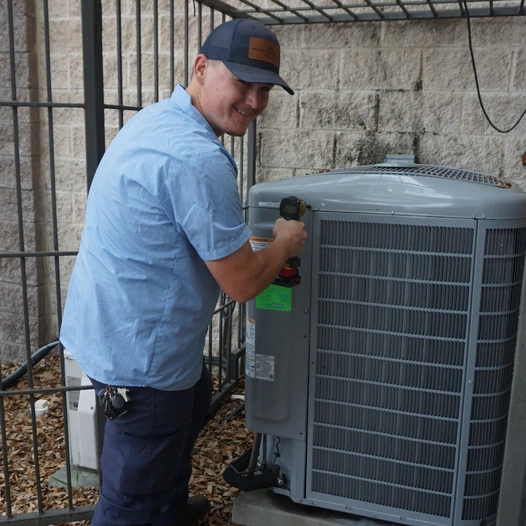
First, Rule Out the Two Normal Reasons
A defrost cycle. On a cold, damp morning, frost builds on the outdoor coil. Every so often the heat pump switches briefly into cooling mode to melt it, and you may feel cool air at the vents and see steam rising from the outdoor unit. That is normal. A defrost cycle usually ends within ten minutes, and warm air comes back on its own.
Heat pump air feels cooler than furnace air. A gas furnace pushes out very hot air in short bursts. A heat pump delivers a steady stream of warm air that is only somewhat warmer than your skin, so it can feel cool to a hand held at the register even while the house is warming. If the rooms are reaching the thermostat setting, the system is doing its job.
Top Reasons Your Heat Pump Is Blowing Cold Air
If the air stays cold for more than a few minutes and the house is not warming up, one of these eight causes is almost always behind it. They are listed roughly in the order worth checking:
- Thermostat settings. A thermostat left on COOL, a set point below room temperature, or a fan set to ON instead of AUTO will all move cool air through the house. With the fan on ON, the blower keeps running between heating cycles and that in-between air feels cold. Set the mode to HEAT, the set point a few degrees above room temperature, and the fan to AUTO.
- A clogged air filter. A filter loaded with dust chokes airflow. The heat pump overheats on the indoor side, cuts back, and the air at the vents comes out lukewarm. In Florida, filters often go straight from a long cooling season into the first cold week without a change.
- The outdoor unit is not running. The indoor blower and the outdoor unit usually sit on separate breakers. If the outdoor breaker trips, or a capacitor or contactor fails, the blower keeps pushing air that never gets heated. Look and listen: if the outdoor fan is still and the unit is silent while the heat is calling, that is your answer.
- A defrost problem. Light frost that clears during a defrost cycle is expected. A coil that stays white, or ice that builds into a solid block, means the defrost control board, a sensor, or the refrigerant charge needs attention. A heat pump buried in ice cannot pull heat from the outside air.
- Low refrigerant from a leak. Refrigerant carries the heat from outside to inside. When a leak lets the charge run low, heating capacity drops first, and the air at the vents feels cool on a cold morning. Refrigerant does not get used up; finding and repairing the leak, then recharging to specification, is technician work.
- A stuck reversing valve. The reversing valve is the part that switches a heat pump between heating and cooling. If it sticks in the cooling position, the system runs normally and delivers cold air no matter what the thermostat says. Sometimes the fix is the valve's solenoid; sometimes the valve itself has to be replaced.
- Failed heat strips. The electric heat strips in your air handler are the backup heater. They help on the coldest hours and keep the air warm during defrost. A burned-out strip, a failed relay, or a tripped breaker for the strips is why some homes only feel the cold air during defrost or on the coldest nights.
- Leaky ducts in the attic. Many Northeast Florida homes run ductwork through an unconditioned attic. A disconnected or torn duct dumps warm air into the attic and can pull cold attic air into the return, so the air that reaches the rooms arrives cool. Rooms at the end of a long duct run feel it first.
Reading the Thermostat
Aux Heat, Emergency Heat, and Heat Strips Explained
Most heat pump thermostats show two extra heating words, and they mean different things. AUX heat lights up when the thermostat brings on the electric heat strips automatically to help the heat pump, usually on the coldest mornings, during defrost, or when you raise the set point several degrees at once. Seeing it now and then is normal.
EM heat, or emergency heat, is a setting you choose. It shuts the heat pump off and heats the house on the strips alone. It works, but it is the most expensive way to heat a home, so treat it as a temporary bridge while the heat pump waits for repair, not a setting to leave on. If AUX heat runs most of the day, or your electric bill jumps after a cold week, the heat pump has usually stopped carrying the load and needs a diagnosis.
Quick Checks Before You Call
- Set the thermostat to HEAT (not EM HEAT), the set point above room temperature, and the fan to AUTO.
- Wait ten minutes in case the system is in a defrost cycle.
- Replace a dirty filter and open any closed supply vents and returns.
- Check the breakers for both the outdoor unit and the air handler, and reset a tripped one once.
- If the air is still cold, switch to EM HEAT to keep the house warm and book a repair.
What You Can Fix Yourself vs. When to Call a Pro
Safe to handle yourself: thermostat settings, replacing the air filter, clearing leaves and debris away from the outdoor unit, opening blocked vents and returns, and one breaker reset. Those steps solve a good share of cold-air complaints and cost nothing to try.
Call a professional for: anything involving refrigerant, the reversing valve, the defrost board, capacitors, heat strips, or a breaker that trips a second time. Refrigerant work requires EPA certification, capacitors hold a charge even with the power off, and heat strips run on high-voltage circuits. The same goes for ice that will not clear, a silent outdoor unit, or a burning smell from the air handler.
When it is time, our Jacksonville heat pump repair team diagnoses heating-mode failures on all major brands of ducted heat pumps, same-day when appointments allow, with a 24/7 emergency line for the nights when the temperature drops fast. If your home heats with a gas or electric furnace instead, our heater and furnace repair technicians cover that system too.
Prevent It: Fall Heat Pump Maintenance
Most of the list above, from weak capacitors and low refrigerant to dirty coils and failing heat strips, is exactly what a fall tune-up exists to catch. A heat pump that ran hard all summer goes into heating season with that wear already built in, and a technician can find it before the first cold front does. See our heat pump maintenance service and the current offers on our specials page.
If you would rather never think about the schedule, the Comfort Club handles seasonal visits automatically and puts members first in line when something does break. In a climate where one system handles both heating and cooling, a visit before each season is the routine that keeps it running.
Here to Answer Your Questions
Frequently Asked Questions About a Heat Pump Blowing Cold Air
The most common causes are a thermostat set to COOL or with the fan on ON, a clogged filter, an outdoor unit that is not running, a defrost problem, low refrigerant from a leak, a stuck reversing valve, or failed heat strips. If the cold air lasts only a few minutes on a cold morning, it is probably a normal defrost cycle.
Yes, briefly. During defrost the heat pump runs in cooling mode for a few minutes to melt frost off the outdoor coil, and you may see steam rising from the unit. The heat strips usually warm the air during defrost, so if the vents blow noticeably cold every time, the strips may need attention.
Emergency heat, shown as EM HEAT, turns the heat pump off and heats the house with the electric heat strips alone. It is meant as a backup while the heat pump is broken. AUX heat is different: the thermostat turns the strips on automatically to help the heat pump on the coldest mornings.
Only if the heat pump has stopped heating and you need to keep the house warm until a repair. Emergency heat runs entirely on electric resistance heat, which costs far more to operate, so switch back to normal HEAT once the heat pump is fixed.
A heat pump delivers a steady stream of moderately warm air rather than the short, very hot bursts of a gas furnace, so the air can feel cool to your hand at the register. If the rooms reach the temperature you set, the system is working. If they do not, have it checked.
Usually it is urgent rather than dangerous. Switch to emergency heat to keep the house warm and book a repair. Call right away if there is a burning smell, a breaker that keeps tripping, or no heat at all on a freezing night, especially with young children or older family members at home.
Still Cold in There? Let's Fix That.
Family-owned in Jacksonville since 1963. Licensed in Florida (# CAC041190, # CACA41190). Same-day heat pump repair when appointments allow, and a 24/7 emergency line across Jacksonville, Orange Park, the Beaches, and Northeast Florida.
Call 904-356-3963 or use the form below to schedule.
Ready to get started? Contact our team for a free estimate on your project.